Sensory Science Group
Sensing the Way to Good Health
Review of the IFST Sensory Science Group and 10th E3S Annual Symposium
Introduction
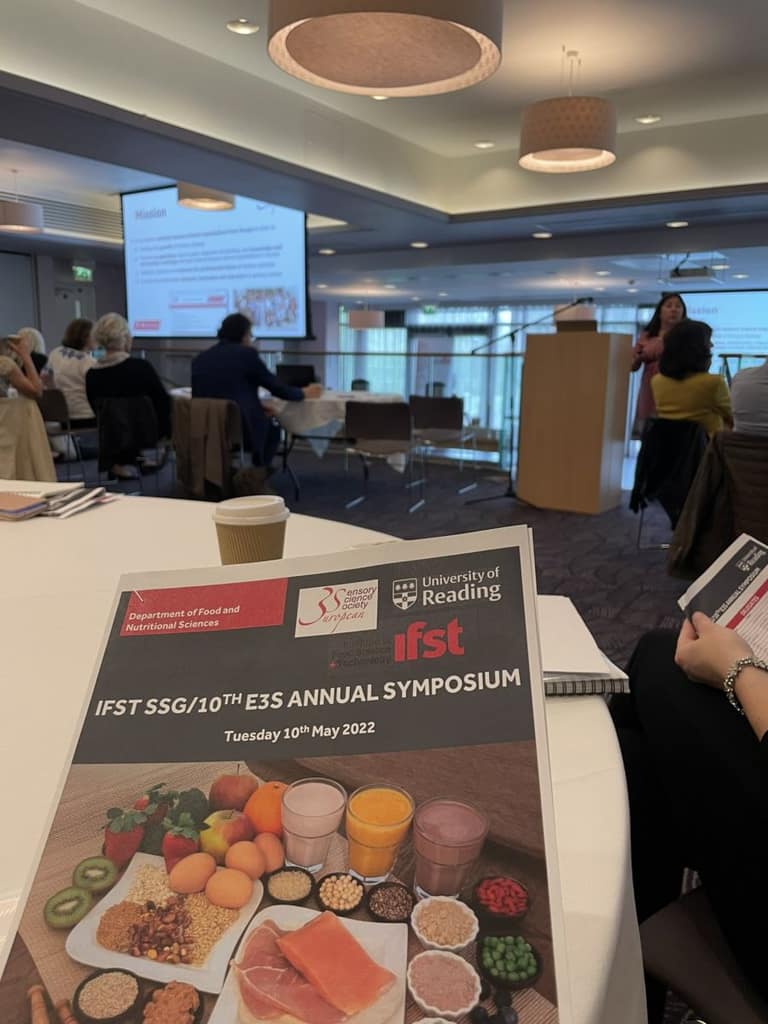
May 2022 saw a long-awaited in-person gathering at the University of Reading for the sensory science community across Europe, at a symposium that had been in the planning for an extended amount of time. Events run both by IFST, and a range of sensory groups, such as conferences, workshops and webinars had still taken place online, but finally, we had the opportunity to meet people, and take part in activities that weren’t possible virtually, including cake to celebrate the E3S’s 10th Anniversary.
Highlights of Talks
Listening to Consumers and Co-creation
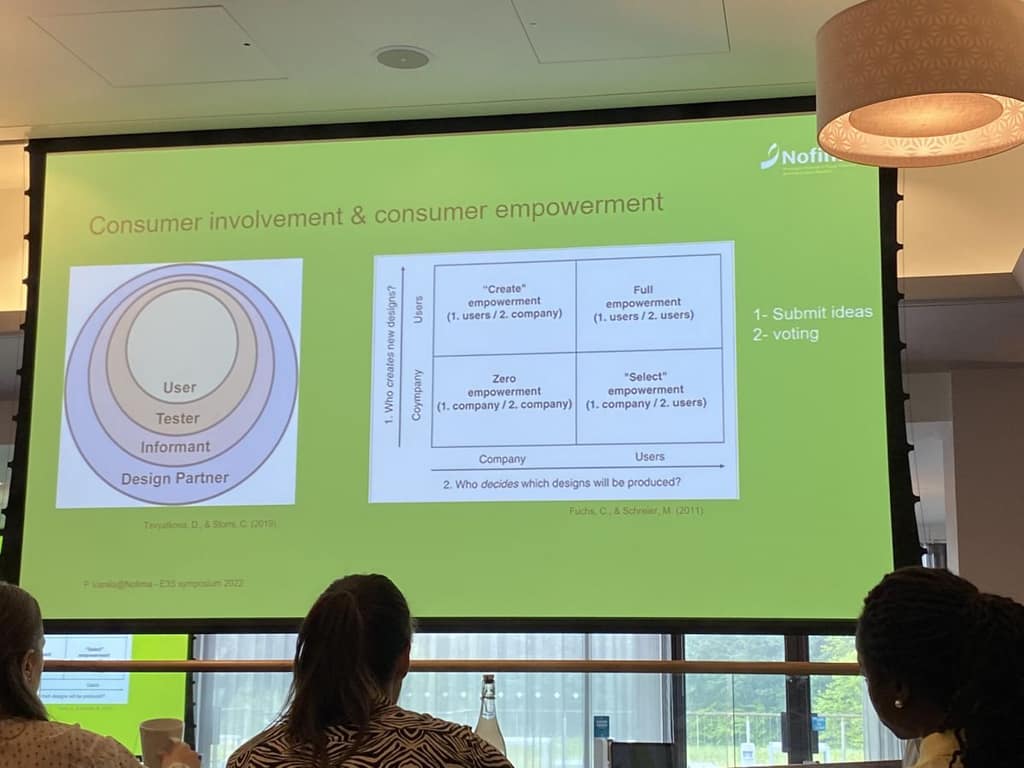
The first talk of the day itself was from Paula around the importance of going beyond just listening to our consumers, and using consumer engagement to create something (a product, a message….) above and beyond simply hearing their reactions to products or ideas.
More Highlights
Co-creation also played a part in the research shared by Lisa Methven, University of Reading and Claire Sulmont-Rosse, INRAE, on the important topic of creating appetising solutions for older adults, through focus groups and home use tests early on in the process. As part of this they carried out a systematic review of 44 published studies to identify key trends. The importance of an appealing diet, as well as the effect of different ingredients and components on that appeal in light of impacted sensory function for cancer patients, was the subject of a pair of later talks by Anestis Dougkas, Institut Paul Bocuse and Stella Lignou, University of Reading.
Industry Insights
Creating Delicious Plant-Based Products
Kate Bailey, Principal Sensory and Consumer Scientist, Kerry and a member of the IFST’s SSG, presented a fascinating talk entitled ‘Creating Delicious Plant-Based Products – The Sensory Perspective’. Kate covered key aspects of developing products with plant-based proteins including the rationale for consumers choosing dairy and meat alternatives, the barriers to choosing these products and what should be considered both by product developers and sensory and consumer scientists.
Young Researchers
A series of flash presentations were given by young researchers; Saumya Sood, Adedoyin Agunbiade and Roisin McCarron from the University of Reading and Hannah Ford from the University of Nottingham. Saumya kicked off the presentations with an interesting insight into the ‘Influence of minerals and amino acids in the perception of saltiness from a sapphire extract used in a snack base’. Adedoyin then took us into the future with her captivating talk, ‘Structural characterization and sensory profile of 3D printed sweet potato pastes’. Roisin then demonstrated the complexity of increasing protein, beta-glucan concentration and mineral bioavailability of oat milk alternatives in her talk ‘Optimising the sensory and nutritional profile of plant-based milk alternatives’. Lastly, Hannah explored the consumer behaviour side of sustainable food consumption with her talk, ‘A cross-cultural perspective of meat-eating consumers’ willingness and motivations to reduce meat intake and accept protein alternatives’.
Global Sensory Community
We finished off the day appropriately by discussing the launch of a new collaboration among international sensory societies, with an introduction from E3S and video contributions from SSP (North America), ANSWER (Africa) and SenseLatam (Latin America).
Get Involved
Are you interested in sensory science, and want to talk to like-minded individuals? Log on to our communication platform for all IFST members, IFST Community.